When radiators upstairs heat normally while downstairs radiators remain cold or sluggish, the boiler is rarely the cause. In most UK homes, this pattern points to how hot water is being distributed rather than whether heat is being produced.
The heating system follows the path of least resistance. When water consistently reaches upstairs radiators more easily than those downstairs, it means circulation is favouring one part of the house. If several rooms feel out of sync at the same time, it can help to step back and assess the wider system using the house cold diagnostic.
Why upstairs radiators heat first
Hot water leaving the boiler is pushed through the system by the circulation pump. It will always travel along the easiest routes first. If upstairs radiators warm quickly while downstairs ones lag behind, it means resistance is lower in the upstairs circuit.
This imbalance causes heat to rise and concentrate upstairs, leaving ground-floor rooms feeling underheated even though the boiler continues to run.
Pressure and circulation imbalance
System pressure plays a major role in how evenly water is distributed. When pressure drops toward the lower end of the operating range, circulation weakens. Radiators that require stronger flow to reach them are affected first.
In many homes, this shows up as downstairs radiators struggling while upstairs ones continue to heat, creating the impression that the system is split in two.
Flow being taken by upstairs radiators
Radiators with less resistance naturally draw more hot water. When upstairs radiators are effectively wide open, they can absorb a disproportionate share of circulation. Downstairs radiators then receive what is left, which may not be enough to heat them properly.
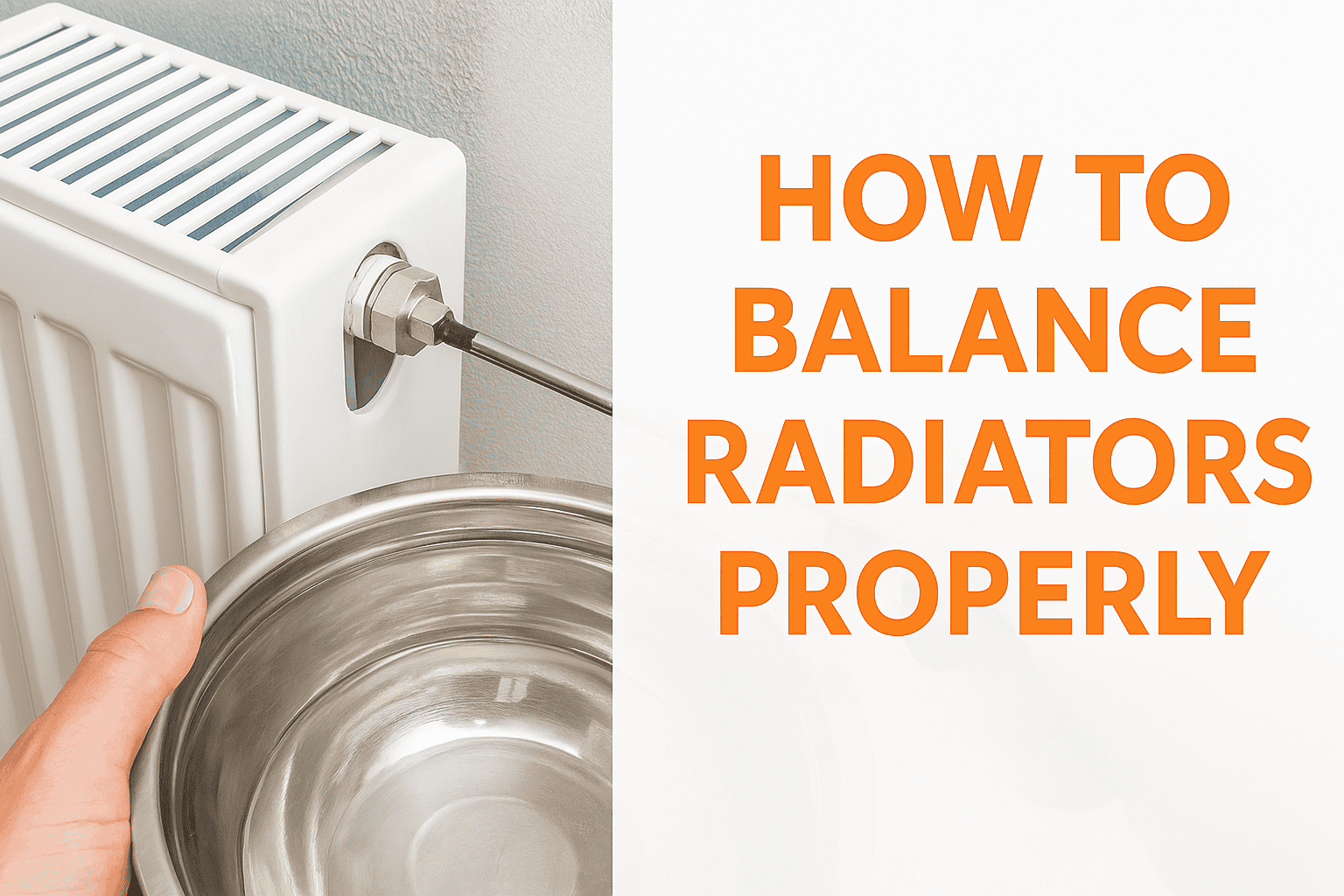
Balancing the system redistributes flow so no single radiator dominates circulation. This process is explained in detail in this guide to balancing radiators properly.
Air limiting downstairs circulation
Air trapped inside radiators or nearby pipework interrupts water flow. When this happens downstairs, those radiators may fail to heat even while others behave normally. Because air reduces circulation efficiency, its effects are often more noticeable on the ground floor.
Persistent air issues usually indicate underlying circulation or pressure instability.
Pump behaviour and system bias
Circulation pumps can favour certain parts of a system depending on speed, condition, and resistance. When flow strength is marginal, water often reaches upstairs radiators more easily, leaving downstairs radiators under-supplied.
This bias becomes more pronounced as systems age or when flow rates are not well matched across circuits.
Pipe layout and natural resistance
Many UK homes were not designed with perfectly balanced heating circuits. Pipe layouts often favour one floor over another. While layout cannot be changed easily, its impact can be reduced by correcting flow imbalance and ensuring no radiators are drawing excessive circulation.
This is why the pattern of upstairs hot and downstairs cold is so common. A deeper explanation of that behaviour is covered in why upstairs radiators can be hot while downstairs stay cold.
Why this imbalance affects the whole house
When downstairs radiators fail to heat properly, the boiler runs longer to compensate, rooms warm unevenly, and comfort drops without reducing energy use. Once circulation is stabilised, heat spreads more evenly and the system becomes far more predictable.
How circulation balance fits into keeping a home warm efficiently is explained in How to Keep a UK Home Warm for Cheap.
When upstairs radiators heat but downstairs stay cold, the system is almost always signalling a circulation imbalance rather than a boiler fault.