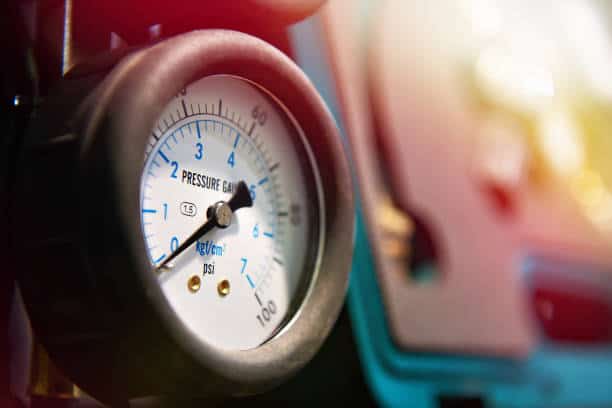
A boiler losing pressure is a problem that often develops quietly. Everything can appear normal one day, then the gauge is suddenly lower than expected. At first, topping the system back up feels routine. When the pressure drops again a few days later, it becomes something that is checked far more often than it should be.
If a boiler repeatedly falls below 1 bar, there is always an underlying cause. Pressure loss does not happen randomly. Once the different causes are understood, it becomes much easier to narrow down what is happening and why the pressure keeps slipping.
If pressure loss appears alongside cold radiators, uneven heating, or a house that struggles to warm up fully, it often helps to step back and assess the wider system using the house cold diagnostic.
Understanding boiler pressure in simple terms
Boiler pressure is the force that pushes hot water through the heating system. If pressure is too low, the boiler cannot circulate water effectively, which leads to radiators taking a long time to heat or failing to heat fully. If pressure becomes too high, the boiler protects itself by releasing water, which then causes pressure to drop again.
Most domestic boilers operate best between 1.2 and 1.5 bar when the system is cold. Pressure usually rises slightly once the heating is running.
When pressure repeatedly drops below 1 bar, it indicates that water is escaping from the system or that a component inside the boiler is no longer controlling pressure correctly.
Starting with the simplest checks
The first step when boiler pressure begins to fall is checking for obvious signs of leaks. Radiators, valves, visible pipework, and areas under sinks are common places to look. Most leaks are slow rather than dramatic. Damp patches, white limescale marks, or slightly oily residue around a valve can all indicate water loss.
In many homes, nothing visibly appears to be leaking. Everything can look completely dry. This is what makes pressure loss confusing — the leak is often small enough to evaporate before it is noticed.
It is also worth considering whether pressure loss started after bleeding radiators. Bleeding removes trapped air but also releases pressure. Bleeding several radiators close together will cause a noticeable drop. If pressure continues to fall after topping up without bleeding again, another fault is usually involved.
Radiator valves and slow leaks
One of the most common causes of gradual pressure loss is a small leak at a radiator valve. These leaks rarely drip or cause visible damage. Instead, they release tiny amounts of water over time, which is enough to lower system pressure day after day.
If pressure drops every few days rather than within hours, a slow valve or joint leak is often responsible. Tightening or resealing the affected valve can significantly improve how long pressure holds, although it may not be the only issue involved.
The outside pipe often reveals pressure faults
Boilers release excess pressure through a copper pipe that exits the property, usually near the boiler location. This pipe is connected to the pressure relief valve, which opens if system pressure becomes too high.
If this valve begins to wear, it may allow water to escape even when pressure levels are normal. This commonly explains cases where boiler pressure drops overnight without any visible leaks inside the home.
Moisture around the outside pipe, particularly after the heating turns off, often indicates that the relief valve is no longer sealing fully.
Expansion vessel problems
The expansion vessel inside the boiler absorbs increased pressure as water heats and expands. If the vessel loses its air charge, the system has nowhere to store expansion. Pressure rises sharply, water is released through the relief valve, and pressure then drops too low when the system cools.
This often creates a pattern where the boiler fires normally but then shuts down unexpectedly, similar to issues explained in why a boiler fires and then switches off.
Recharging the expansion vessel usually stabilises pressure and prevents repeated pressure swings.
Why pressure loss is often caused by several small issues
In many homes, pressure loss is not caused by a single major fault but by several smaller issues working together:
- A radiator valve releasing small amounts of water
- An expansion vessel that is not holding charge properly
- A pressure relief valve that occasionally discharges
Individually these issues may seem minor. Combined, they can cause pressure to fall almost daily.
Once these faults are resolved, pressure usually remains stable, radiators heat consistently, and constant topping up is no longer required.
Why frequent topping up makes things worse
Frequently topping up boiler pressure introduces fresh oxygen into the heating system. Oxygen accelerates corrosion inside radiators and pipework. Increased corrosion leads to more air, more sludge, and eventually more leaks.
Although topping up appears to solve the immediate problem, doing it repeatedly can shorten the lifespan of the heating system.
Once the underlying fault is resolved, pressure should only need occasional adjustment rather than regular intervention.
When professional help is needed
Some pressure problems can be monitored, but professional advice is recommended when pressure rises sharply during heating and then drops suddenly, the external relief pipe drips regularly, or pressure falls within hours instead of days.
Understanding how pressure behaviour fits into the wider heating picture makes it easier to avoid unnecessary cost. A broader explanation of how heating systems, heat loss, and running costs interact can be found in How to Keep a UK Home Warm for Cheap.