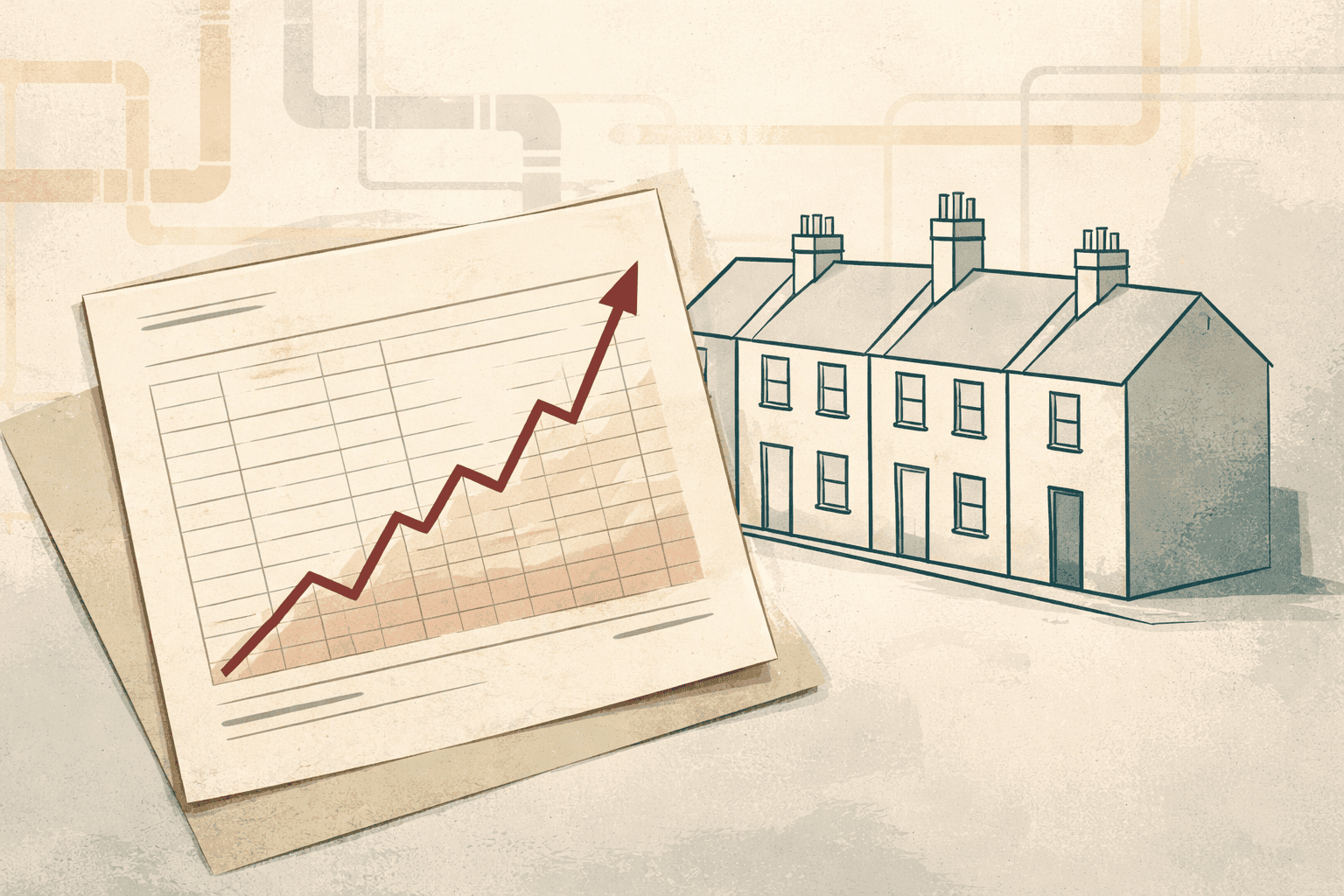
Ofgem has confirmed the energy price cap will fall to £1,641 for a typical household from April 2026, a modest but welcome reduction after several years of elevated prices. That relief may be short-lived. The US and Israeli strikes on Iran that began in late February sent wholesale gas prices sharply higher, and forecasters who were previously expecting July’s cap to hold roughly flat have revised their estimates significantly upward. The July cap will be confirmed by Ofgem on 27 May, and what happens to wholesale prices between now and mid-May will largely determine whether households face a meaningful increase from the summer.
Whether energy bills rise substantially in July depends heavily on how long the current market disruption continues. What is not uncertain is that UK households remain exposed to international wholesale price movements in a way that has not changed since the 2021 energy crisis, and the most effective response to that exposure is reducing how much gas your home actually uses.
What has happened to wholesale prices and why it matters for UK bills
The UK imports a significant proportion of its gas as liquefied natural gas, with supply routes running through the Strait of Hormuz and the broader Middle East corridor. Disruption to shipping and supply confidence in that region raises wholesale gas prices on the global market, which feeds through into UK household bills via the Ofgem price cap methodology. The cap is set quarterly based on average wholesale prices over an assessment period, which means a sustained period of elevated prices between now and mid-May will be reflected in the July cap even if prices subsequently fall back.
Before the conflict began, Cornwall Insight, the most closely watched independent forecaster of the price cap, expected July’s cap to hold almost flat at around £1,645. Their revised forecast following the Iran strikes puts July at £1,801, an increase of around £160 over the April level. EDF and Sainsbury’s Energy are forecasting a larger rise to around £1,913. The range between forecasters reflects genuine uncertainty about how long wholesale prices will stay elevated, but all of the credible forecasters are now pointing in the same direction.
It is worth keeping this in perspective. Even at £1,913, bills would remain well below the £2,380 peak of the 2022 energy crisis. But the April 2026 relief was real, and a reversal that takes bills back above £1,800 will be felt by households who adjusted their budgets based on the April reduction.
Your July Bill Impact Calculator
Enter your current annual energy bill to see your projected increase under different July forecast scenarios.
Check your last bill or energy account. The UK average is around £1,641 on the current cap.
Why the current cap protects you until July but not beyond
The April to June 2026 price cap is already set at £1,641 and cannot change until 1 July regardless of what happens in energy markets between now and then. This matters because it means households have a defined window, roughly the next three months, in which their bills are protected even as wholesale prices rise sharply. The disruption has to be sustained through mid-May to fully feed into the July cap figure, so a resolution to the conflict before then would significantly limit the bill impact.
What the cap does not do is insulate households indefinitely. If wholesale prices stay elevated through the assessment period, the July increase feeds directly into the cap methodology and households see higher unit rates from 1 July. At that point, the only way to reduce what you pay is to reduce what you use.
The April green levy removal and what it means for your bill
The April 2026 cap reduction was not primarily driven by falling wholesale prices. It was driven by the government's decision to remove the Energy Company Obligation levy and shift green energy costs to general taxation from April. This produced a reduction in unit rates worth around £150 for a typical household regardless of wholesale market movements. That saving is permanent and does not disappear if the July cap rises, so households will be better off than they would have been under the old levy structure even if the July cap increases significantly.
The levy removal and the Iran-driven wholesale price increase are running in opposite directions, and the net effect on your July bill depends on which is larger. At Cornwall Insight's low forecast of £1,801, the July cap is still below the January 2026 level of £1,758 when the levy is factored out. At EDF's higher forecast of £1,913, the increase materially exceeds the levy saving and households would be paying more in real terms than at any point since early 2025.
What homeowners can actually do before July
The gap between a home that uses typical amounts of gas and one that uses significantly less is determined almost entirely by the building fabric: how well insulated the walls, floor, and loft are, how airtight the windows and doors are, and how efficiently the heating system distributes what heat it does produce. None of these change quickly, but several of the most impactful improvements are either free through grant funding or achievable in an afternoon.
Cavity wall insulation, for households that do not already have it, is the single highest-impact improvement available for most UK homes. It reduces how quickly heat escapes through external walls, which means the boiler runs shorter cycles to maintain the same temperature. The Warm Homes Local Grant currently funds this at no cost for households with income under £36,000 and an EPC rating of D or below. With bills potentially rising in July, applying now rather than waiting is directly in your financial interest. The full eligibility criteria and application process are covered in the Warm Homes Local Grant guide.
Draught-proofing produces a faster result and requires no grant funding. Sealing gaps around windows, letterboxes, and under external doors reduces cold air infiltration, which reduces how hard the boiler has to work to maintain temperature. The most effective options and where to prioritise them are covered in the best draught stoppers for UK homes.
Radiator balancing is free to do yourself and improves how evenly heat is distributed around the house. A system where some radiators are overheating while others are underperforming wastes energy and reduces comfort simultaneously. The step-by-step process is covered in how to balance radiators properly.
Thermostat behaviour also matters more than most homeowners assume. Turning a thermostat down by one degree typically reduces gas consumption by around three percent. The relationship between thermostat settings and actual bills, and whether leaving the heating on low is cheaper than heating on demand, are covered in does turning the thermostat down save money.
Whether to fix your energy tariff now
Some fixed tariffs are currently priced close to or slightly above the April cap level. Whether fixing makes financial sense depends on your view of how long the current market disruption will last. If wholesale prices stay elevated through May, the July cap rises and a fixed tariff taken now at around £1,700 to £1,750 looks prescient. If prices fall back quickly, the April cap may prove cheaper and a fixed tariff taken now carries an exit fee cost.
WarmGuide does not provide tariff switching advice. The MoneySavingExpert Cheap Energy Club and Ofgem's own comparison tool are the appropriate places to compare current fixed deals against forecast variable rates. If you are with OVO Energy or considering switching, their solar and heating packages are worth checking alongside any tariff comparison, as combining a fixed rate with solar generation reduces your exposure to wholesale price movements more fundamentally than a fixed tariff alone. What we can say is that regardless of which tariff you are on, reducing your consumption is the most reliable hedge against bill volatility, because lower usage reduces the impact of any cap increase proportionally.
The longer-term picture
The Iran conflict has refocused attention on how exposed UK household bills remain to global wholesale gas prices, more than four years after the original 2021 energy crisis made this exposure visible. The structural answer to that exposure is reducing how much gas UK homes burn, through insulation, heat pumps, and efficiency improvements, which is exactly what the Warm Homes Local Grant and the broader Warm Homes Plan are designed to accelerate.
In the shorter term, the window before July is the most useful period in which to act. Improvements made now reduce your consumption before the higher cap takes effect, maximise the benefit of any grant funding currently available, and put your home in a better position regardless of where prices end up. For a full overview of everything currently available, the energy grants and support hub covers all active schemes, and the complete guide to keeping a UK home warm for cheap covers the efficiency improvements with the best return for the typical UK home.