When the US and Israeli strikes on Iran began on 28 February 2026, the impact on UK energy costs was immediate. Wholesale gas prices rose sharply and forecasters began revising their July price cap estimates upward. That story received significant coverage, and WarmGuide published a detailed guide to what it means for the July price cap including a personal bill calculator. But for the estimated 1.7 million UK households that heat their homes with oil or LPG rather than mains gas, the situation is considerably more severe, and almost entirely without the protections that gas and electricity customers take for granted.
If you heat your home with oil or LPG and want to understand what grants might be available to help you transition to a less volatile fuel source, the energy grants and support hub covers all current schemes in detail.
The fundamental difference: no price cap for oil and LPG
Gas and electricity prices for UK households are regulated by Ofgem’s energy price cap, which is set quarterly and limits how much suppliers can charge per unit of energy. When wholesale gas prices rise sharply, as they have since the conflict began, the cap provides a buffer. Households are protected at the current rate until the cap is reviewed, which next happens on 1 July 2026. That is why the gas story is largely a July problem rather than an immediate one.
Heating oil and LPG have no equivalent protection. There is no price cap, no regulatory buffer, and no quarterly review process. The Iran conflict sparked daily price fluctuations of up to 10p a litre according to the Fuel Distribution Association, with costs moving from 61p a litre before the conflict to £1.52 after in some cases. When wholesale oil prices move, that movement is passed directly and almost immediately to the consumer. There is no mechanism to slow it down.
This structural difference explains why oil and LPG households are experiencing the current crisis so much more acutely than their gas-connected neighbours. A gas customer whose bills are rising watches their July forecast with concern. An oil customer who needs to refill their tank this week faces the full impact of current market prices today.
What has happened to heating oil prices since the conflict began
Brent crude oil prices surged from around $70 a barrel before the conflict to over $110 per barrel within days of the initial US-Israeli strikes, as the conflict disrupted approximately 20% of global oil supplies transiting the Strait of Hormuz. Prices briefly reached $120 a barrel before falling back as diplomatic signals emerged, but they remain significantly higher than levels seen before the conflict, with oil prices currently sitting well above $90 per barrel.
The impact on UK heating oil prices has been immediate and dramatic. One household in rural Essex paid £592 for 1,000 litres of heating oil on 20 February. Just two weeks later, the same order was quoted at £1,322, more than double the original price. Martin Lewis described the price rises as “extremely excessive” and warned that households coming to the end of their tank right now face particularly steep costs, acknowledging that beyond price comparison and collective buying, options for consumers are limited.
Chancellor Rachel Reeves has written to the Competition and Markets Authority asking it to be on high alert for unjustifiable price rises on heating oil, and has met with fuel bosses to press them on what they are doing to keep prices down. Whether this produces any meaningful relief for households is unclear. The underlying driver is global crude oil prices, not supplier behaviour, and there is limited regulatory leverage available.
Prices updated — 18 March 2026
The BoilerJuice national average for kerosene now stands at around 142p per litre including VAT, compared with roughly 59–65p before the conflict began. Prices vary considerably by location and supplier — from under 60p to over 95p per litre excluding VAT — so comparing before ordering remains important. The calculator below has been updated to reflect current conditions. Enter your own figures for the most accurate picture.
Why off-grid rural households are disproportionately affected
The homes most reliant on heating oil are concentrated in rural areas where mains gas infrastructure does not reach. Government figures show that about one in five homes in the East of England are off the gas grid, meaning roughly 576,000 households out of 2.84 million rely on alternative heating systems such as oil, electricity or solid fuels. Similar proportions apply across much of rural Wales, Scotland, and other parts of England where the gas network is sparse.
These households tend to be older, less well insulated, and more likely to have residents who are elderly or in poor health, and are exactly the population most vulnerable to heating cost shocks. They are also less likely to have access to the kind of collective buying schemes that can provide modest relief during price spikes, simply because they are geographically dispersed.
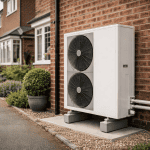
The irony is that these are also the households best positioned to benefit from the transition away from fossil fuels. A heat pump replacing an oil boiler in a rural property can reduce running costs significantly even at current electricity prices, and the grant funding available for this transition is substantial. The Warm Homes Local Grant provides up to £30,000 for eligible households, and the Boiler Upgrade Scheme provides £7,500 toward heat pump installation for any homeowner regardless of income. Both are available now and both are worth understanding before the next price shock arrives.
LPG households face the same exposure with less awareness
Liquefied petroleum gas is used by a smaller number of UK households than heating oil, around 150,000, but faces the same absence of price cap protection. LPG is derived from natural gas processing and oil refining, and its price tracks both gas and oil markets. When both move simultaneously, as they have since the conflict began, LPG prices can move sharply.
LPG households are additionally constrained by the fact that most are tied to a single supplier through a contract that includes the storage tank rental. Switching supplier is more difficult than for oil customers, who can in principle buy from any supplier willing to deliver. This reduces the effectiveness of price comparison as a mitigation strategy during periods of volatility.
What oil and LPG households can do right now
The options are limited but worth working through in order of impact.
If your tank is not yet critically low, holding off on a full refill and purchasing smaller quantities allows you to benefit if prices fall back as the conflict situation develops. Energy specialists recommend that households consider purchasing smaller amounts of oil during periods of high price volatility rather than locking in at current elevated prices for a large delivery. The risk is that prices rise further before your next purchase is needed.
Price comparison is more meaningful for oil than LPG. BoilerJuice and ClickEnergy are the main comparison platforms for heating oil in the UK and can show significant variation between suppliers in the same area. Collective buying through oil clubs, where neighbours coordinate bulk purchases to negotiate better rates, can produce savings of 3 to 5p per litre in normal conditions, though the benefit is reduced during periods of extreme volatility when all suppliers are managing their margins tightly.
Reducing consumption is the most reliable lever available regardless of market conditions. Reducing the thermostat by one degree typically cuts fuel consumption by around ten percent. Draught-proofing reduces how quickly heat escapes and means the boiler runs less frequently to maintain the same temperature. Balancing the radiators ensures that the heat the boiler does produce is distributed as efficiently as possible around the house. None of these require capital expenditure and all of them reduce the volume of oil or LPG consumed per heating cycle.
If the boiler itself is underperforming, the WarmGuide heating diagnostic helps identify whether the problem is the system, the building fabric, or the distribution of heat around the house, and routes you to the most relevant guide without requiring you to understand the technical details first.
Heating Oil and LPG Cost Impact Calculator
See what the current price surge is costing you and how much you could save by switching to a heat pump.
Estimates based on prices you enter. Heat pump saving assumes a typical 3-bed UK home on a standard electricity tariff.
The longer-term case for switching away from oil and LPG
The current price shock is acute but it is not new. Oil and LPG prices spiked in 2021 and 2022 during the post-pandemic energy crisis and again following Russia’s invasion of Ukraine. The pattern of periodic sharp increases driven by geopolitical events affecting global oil supply is structural, not exceptional. Households relying on these fuels face this exposure indefinitely unless they make the transition to a less volatile energy source.
The most practical alternative for most rural off-grid homes is a heat pump, which runs on electricity and is therefore subject to the Ofgem price cap rather than unregulated oil markets. Electricity prices have their own volatility, but the combination of regulatory protection, improving tariff options for heat pump users, and the potential to combine with solar generation makes the long-term cost trajectory considerably more stable than oil or LPG.
The Boiler Upgrade Scheme currently provides £7,500 toward the cost of a heat pump installation and runs until 2029 to 2030. For households whose boiler is approaching end of life, replacing it with a heat pump rather than a like-for-like oil or LPG boiler replacement is worth costing properly before committing. The full overview of current grants covers the eligibility criteria, the application process, and what each scheme actually pays for.
The difference between this and the July gas cap story
It is worth being clear about what distinguishes the oil and LPG situation from the gas price cap story that has received more coverage. Gas customers are facing a probable increase in July when the cap is reviewed, and the scale of that increase depends on how long the conflict continues to affect wholesale gas markets. That is a real concern and one worth preparing for.
Oil and LPG customers are facing the same market disruption but without the buffer. The prices they pay today already reflect current crude oil market conditions. There is no cap review in July that might provide relief, and there is no regulatory mechanism that limits how quickly market movements are passed on. The practical implication is that the preparation advice for oil and LPG households is to reduce consumption, compare prices, and consider the transition to electricity. All of this is more urgent than for gas customers, and the case for acting on available grant funding before the next disruption arrives is stronger.
For the full picture on what the conflict means for UK energy costs across gas, oil, and LPG, and to calculate your projected July bill increase if you are on a gas tariff, the Iran conflict energy bills guide and calculator covers the detail. For everything currently available to help UK households reduce their dependence on fossil fuel heating, the complete guide to keeping a UK home warm for cheap covers the full range of improvements in the order that tends to produce the best results.