What Is the Energy Price Cap? Everything You Need to Know
If you pay a gas or electricity bill in the UK, the energy price cap directly affects how much you pay. Most people have heard the term but are unclear on exactly what it does, who sets it, and why their bill still goes up even when a cap is in place. This guide explains how the price cap works in plain English, who it protects, how it is calculated, and what its limits are, including why it does not protect every household and why it is currently under significant pressure from events in the Middle East.
If you want to understand what the current conflict is doing to energy prices specifically, the Iran conflict energy bills guide and July calculator covers the latest forecasts and lets you calculate your personal projected increase.
What the energy price cap actually is
The energy price cap does not cap your total energy bill. This is the most common misunderstanding about how it works, and it is worth being clear about from the start. What the cap limits is the unit rate you pay for each kilowatt hour of gas and electricity you use, and the maximum daily standing charge your supplier can apply. If you use more energy, you pay more. The cap limits the price per unit, not the total amount on the bill.
To use a simple comparison: the price cap is like a petrol price guarantee that limits what forecourts can charge per litre. If the limit is £1.50 a litre, you cannot be charged more than that per litre. But if you fill a large tank rather than a small one, your total cost is still higher. The cap limits the rate, not the total.
The current price cap from April to June 2026 is set at £1,641 per year for a typical dual-fuel household paying by direct debit. That figure represents what a household using the Ofgem-defined typical amount of energy, 11,500 kWh of gas and 2,700 kWh of electricity per year, would pay at the capped unit rates. Your actual bill will be higher or lower depending on how much energy you use.
Who sets the price cap
The energy price cap is set by Ofgem, the Office of Gas and Electricity Markets. Ofgem is the independent regulatory body for the energy industry in Great Britain. It was established in 2000 and operates under powers granted by Parliament. It is not a government department and is not directly controlled by ministers, though it operates within a framework set by legislation and government policy.
Ofgem introduced the energy price cap in January 2019, following years of concern that customers on standard variable tariffs were being significantly overcharged compared to what competitive market rates would justify. Before the cap, a household that did not switch supplier regularly could end up paying substantially more than an active switcher for identical energy. The cap was designed to eliminate this loyalty penalty.
The cap applies in England, Scotland and Wales. Northern Ireland has a separate regulatory framework. The Utility Regulator in Northern Ireland sets equivalent protections for Northern Irish consumers.
How often the cap changes
The price cap is reviewed and updated four times a year, changing on 1 January, 1 April, 1 July, and 1 October. Until 2022 it changed every six months, but the extreme volatility of wholesale energy prices during the 2021 to 2022 energy crisis led Ofgem to move to quarterly reviews so the cap could respond more quickly to market movements in both directions.
Ofgem confirms the cap level approximately six weeks before each change date. The July 2026 cap will be confirmed by 27 May 2026, based on average wholesale energy prices during the assessment window running through mid-May.
How the cap level is calculated
Ofgem calculates the cap by working out the genuine costs that energy suppliers face in providing gas and electricity to households, and setting the cap at a level that allows efficient suppliers to recover those costs while making a reasonable margin. The calculation is complex but the main components are:
Wholesale energy costs make up the largest single element. These are the prices suppliers pay on wholesale markets to buy the gas and electricity they then sell to consumers. Wholesale prices are set by global markets and reflect supply and demand, geopolitical events, weather patterns, and the price of competing fuels. When wholesale prices rise, the cap follows. When they fall, the cap falls.
Network costs cover the transmission and distribution infrastructure that gets gas through pipes and electricity through cables to homes. These costs are relatively stable and include the maintenance, operation, and upgrade of the national grid and local distribution networks.
Policy and environmental costs fund government schemes related to renewable energy, energy efficiency programmes, and social obligations. These costs have historically been bundled into unit rates, though the government removed the Energy Company Obligation and Renewables Obligation elements from unit rates in April 2026, cutting around £150 from a typical bill.
Operating costs and supplier margin cover the costs of running an energy supply business and a regulated profit margin for efficient suppliers.
The sum of these components, expressed as a unit rate per kilowatt hour, becomes the capped rate. Ofgem publishes the full methodology and the detailed calculation each quarter.
Who is covered by the cap
The price cap applies to households on standard variable tariffs and default tariffs. These are the tariffs that customers end up on automatically when they do not actively choose a different product. The vast majority of UK households are on variable tariffs and are therefore covered.
Households on fixed-rate tariffs are not covered by the cap in the same way. A fixed tariff locks in a specific unit rate for the duration of the contract regardless of what the cap does. This can be beneficial when the cap is rising, because the fixed rate may be below the capped level. It can be costly when the cap falls significantly, because the fixed rate may end up above the new capped level.
Prepayment meter customers are covered by a separate prepayment price cap, which is set at a slightly different level from the direct debit cap. The April 2026 prepayment cap is £1,597 for typical use, slightly below the direct debit cap of £1,641.
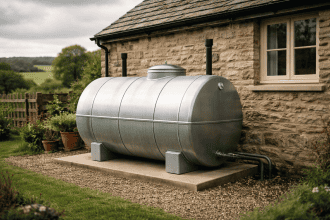
The cap does not apply to heating oil or LPG. Households using these fuels have no equivalent price protection. When global oil prices spike, as they have following the Iran conflict, oil and LPG households face the full impact immediately with no regulatory buffer. The situation for these households is covered in detail in the guide to why the Iran conflict is hitting oil and LPG households harder than gas.
The benefits of the price cap
The clearest benefit of the price cap is protection from the loyalty penalty that existed before its introduction. Before 2019, customers who stayed with the same supplier on a standard variable tariff for several years could end up paying substantially more than customers who switched regularly. The cap means that no household on a standard variable tariff can be charged more than the capped unit rate, regardless of how long they have been with their supplier or how engaged they are with the energy market.
The cap also provides a form of price stability at the consumer level. Wholesale energy prices can be extremely volatile, moving significantly week to week based on weather, geopolitics, and market sentiment. The quarterly cap smooths some of this volatility, because the cap is set based on average wholesale prices over an assessment window rather than responding to daily market movements. A sharp spike in wholesale prices in one week does not immediately translate into higher household bills.
During the 2021 to 2023 energy crisis, the cap prevented wholesale prices from passing through to consumers at their full magnitude. When Ofgem calculated that the cap would need to rise to £4,279 in January 2023 to cover supplier costs at prevailing wholesale prices, the government introduced the Energy Price Guarantee to cap bills at a lower level, subsidising the difference. Without the regulatory infrastructure of the price cap, this kind of targeted consumer protection would have been much harder to implement quickly.
The cap also provides a transparent benchmark. Because the capped level is publicly announced and widely reported, consumers can use it as a reference point when evaluating fixed tariffs. If a fixed tariff is priced close to or below the current cap, it may offer meaningful protection against future cap increases. If it is priced significantly above, switching to the variable cap rate is clearly preferable.
The limitations and criticisms of the price cap
The most fundamental limitation of the price cap is that it limits unit rates, not total bills. In periods of very cold weather, a household that uses significantly more energy than the Ofgem typical will pay significantly more than the headline cap figure, even though their unit rates are capped. The cap does not prevent bills from being high for high-usage households.
The cap also only applies to gas and electricity from mains supply. The approximately 1.7 million households heating with oil or LPG, and the roughly 150,000 using LPG specifically, have no equivalent protection. These are often older rural properties with residents who are elderly or on lower incomes, making the absence of equivalent protection for this group a persistent equity concern.
Critics argue that the cap reduces the incentive to switch suppliers and shop around, because it removes the worst outcomes from staying on a standard variable tariff. In a competitive market, the threat of being overcharged drives consumers to engage and switch. With the cap in place, the downside of inaction is limited, which some economists argue reduces the competitive pressure on suppliers to innovate and offer better deals.
The standing charge element of the cap is a particular point of contention. Standing charges, the daily fee paid simply for being connected to the energy network, average around £315 per year under the April 2026 cap. Campaigners including Martin Lewis have argued that standing charges unfairly penalise low-usage households and those on lower incomes, because the daily charge is the same regardless of how little energy is used. A household that successfully reduces its energy consumption to save money still pays the full standing charge. Ofgem has begun requiring suppliers to offer at least one low standing charge tariff option, but the broader structure remains a point of criticism.
The cap also cannot insulate consumers from very large or sustained rises in wholesale energy costs. When Russia’s invasion of Ukraine in February 2022 sent wholesale gas prices to record levels, the cap had to rise dramatically to reflect supplier costs. Without the government’s Energy Price Guarantee subsidy, bills would have reached £4,279 for typical households. The cap is a regulatory mechanism, not a government subsidy, and it cannot hold prices below supplier costs indefinitely without additional government intervention.
The cap and the current Iran conflict
The price cap’s quarterly structure means that events which move wholesale prices sharply can take several months to feed through into household bills. The US and Israeli strikes on Iran that began in late February 2026 sent UK wholesale gas prices up 69% in 30 days. Qatar declared force majeure on LNG exports from Ras Laffan, removing approximately 20% of global LNG supply. These developments will not affect household bills until the July cap, because the April cap was already set before the conflict began.
The July 2026 cap will be set based on average wholesale prices during the assessment window running to mid-May. If wholesale prices remain elevated through that period, the July cap will reflect the full impact of the conflict. Forecasters are currently predicting a rise of between £160 and £860 on a typical bill from July, depending on how long the disruption continues. The July bill impact calculator lets you calculate the projected increase for your specific bill level under different forecast scenarios.
What the cap does not protect you from
Understanding what falls outside the cap’s protection helps you understand where the real levers are for managing energy costs. The cap cannot protect you from high bills caused by high usage. It cannot protect oil and LPG households. It cannot prevent large increases when wholesale costs rise significantly and sustain that level through the quarterly assessment period. And it does not apply to fixed tariffs, meaning households that lock in during a period of elevated prices may find themselves above the cap level if wholesale prices subsequently fall.
The most durable protection against energy bill volatility is reducing how much energy your home consumes in the first place. A home that uses significantly less gas than the Ofgem typical because it is well insulated and draught-proofed pays less regardless of where the cap is set. Thermostat management, draught-proofing, radiator balancing, and insulation improvements all reduce consumption and therefore reduce exposure to cap increases.
For households who may qualify for free insulation and heating improvements, the Warm Homes Local Grant provides up to £30,000 of improvements for eligible households with incomes under £36,000. The full range of current schemes is covered in the energy grants and support hub.
A brief history of the price cap
The price cap was introduced in January 2019 at £1,137 for typical use. It remained relatively stable until the global energy crisis of 2021 to 2022, when post-pandemic demand recovery, reduced Russian gas supply, and then the invasion of Ukraine drove wholesale prices to historic highs.
The cap rose from £1,277 in October 2021 to £1,971 in April 2022, then to £3,549 in October 2022. At that point the government introduced the Energy Price Guarantee, which capped bills at £2,500 for typical use through government subsidy. The EPG was withdrawn in July 2023 as wholesale prices fell back, and the cap itself subsequently fell to levels not seen since before the crisis. The April 2026 cap of £1,641 reflects the removal of green levies from unit rates as well as a continued easing of wholesale prices before the Iran conflict began to push them upward again.
For the complete picture on keeping your home warm efficiently and managing heating costs regardless of where the cap sits, the complete guide to keeping a UK home warm for cheap covers the full range of practical improvements in the order that tends to produce the best results.