Damp and Mould in a Rented Home: Your Rights and What to Do
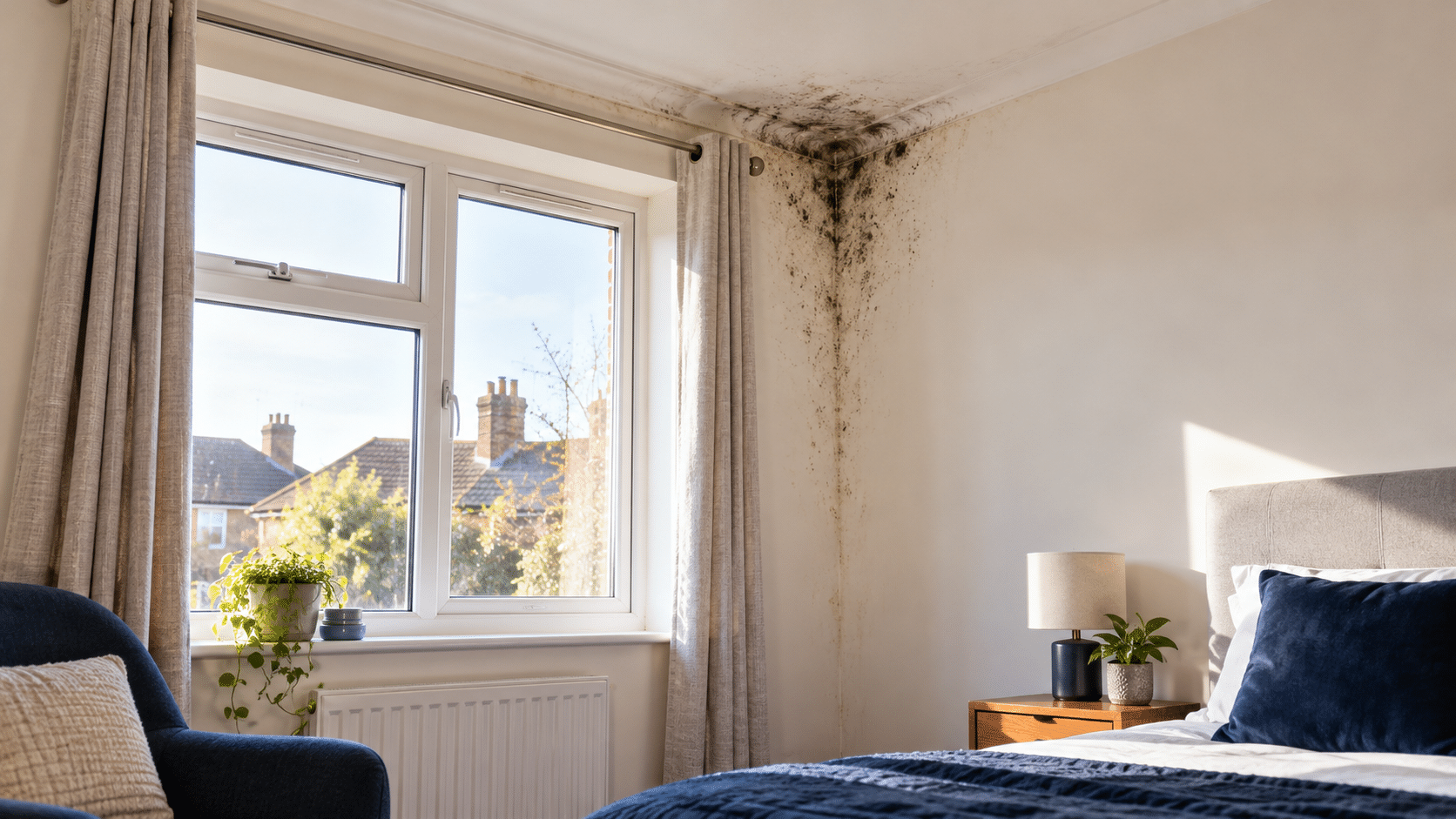
Quick answer: In England, a landlord must keep a rented home free from serious damp and mould and must repair the causes: leaks, faulty gutters, broken extractor fans, rising damp and poor heating. Report it in writing, keep dated photos, give a clear deadline, and escalate to the council if nothing happens. Never withhold rent. The steps, evidence list and escalation routes are below.
Not sure what is causing it? How to tell damp from condensation explains the clues. The cause matters because it decides who has to fix it, which is covered in the responsibility table below.
One-to-one help
Dealing with damp or mould in a rented home?
Get personal advice on your next step and a letter to your landlord or agent, written for your tenancy and citing the right law for where you live.
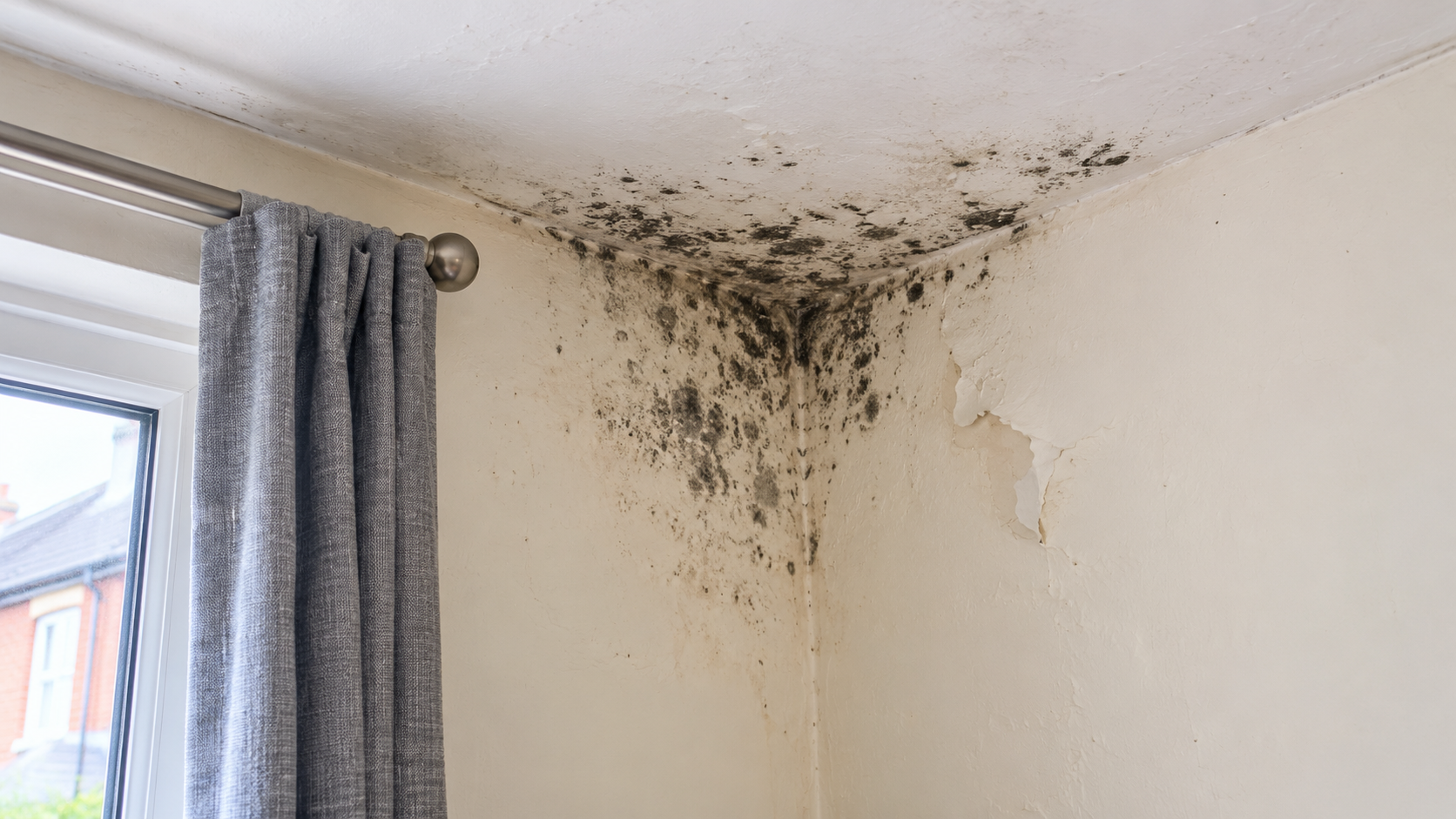
Who is responsible: you or the landlord?
Landlords often blame tenants (“you are not opening windows”). The reality is mixed, and the table shows where the line usually falls in England.
| Issue | Landlord | Tenant |
|---|---|---|
| Leaking roof, gutters, walls, windows | Yes, repair | Report it promptly |
| Rising or penetrating damp | Yes, repair | Report it promptly |
| Leaking pipes or plumbing | Yes, repair (appliance you own: you) | Report it promptly |
| Broken extractor fan or blocked vents | Yes, repair or replace | Use fans, do not block vents |
| Broken heating or no insulation | Yes, repair and provide | Heat the home reasonably |
| Everyday condensation from cooking, showers, drying clothes | Must provide adequate ventilation and heating | Ventilate, wipe windows, air the home when drying clothes |
| Redecorating after mould caused by a defect | Usually yes | Wipe down small areas of surface mould |
| Your belongings damaged by damp | May owe compensation if caused by disrepair | Keep proof and receipts; contents insurance helps |
For day-to-day tenant habits that cut condensation, the main ones are: use extractor fans or open a window when cooking and showering, dry washing outside or with a window open, and keep a steady low background heat rather than short blasts. The full list is in the guide to damp versus condensation, and how to keep a home warm for cheap covers heating on a budget. Small patches of surface mould can be wiped off with a damp cloth and a mould remover. Photograph them first, never dry-brush, and report anything that keeps returning.
Your legal rights
England
- Landlord and Tenant Act 1985, section 11: the landlord must repair the structure and exterior and keep installations for heating, water and sanitation in working order.
- Homes (Fitness for Human Habitation) Act 2018: the home must be fit to live in at the start of the tenancy and throughout it. Serious damp and mould can make a home unfit.
- Housing Health and Safety Rating System (Housing Act 2004): the council can inspect, rate the hazard and order the landlord to fix it. Serious (Category 1) hazards require action.
- Renters’ Rights Act 2025: from 1 May 2026, Section 21 “no-fault” evictions ended in England, which makes it much harder for a landlord to evict you for complaining. The Act also raised the maximum civil penalties councils can issue for some housing offences to £40,000.
- Awaab’s Law: in force for social housing in England since 27 October 2025, with strict deadlines (see below). For private renting, the Renters’ Rights Act gives the government the power to extend it, but at the time of writing no start date has been confirmed.
Scotland and Wales
| Nation | Main standard | Where to complain |
|---|---|---|
| Scotland | Repairing Standard (Housing (Scotland) Act 2006): home must be wind and watertight and fit to live in | First-tier Tribunal for Scotland (Housing and Property Chamber) |
| Wales | Fitness for human habitation (Renting Homes (Wales) Act 2016) | Local council, or court |
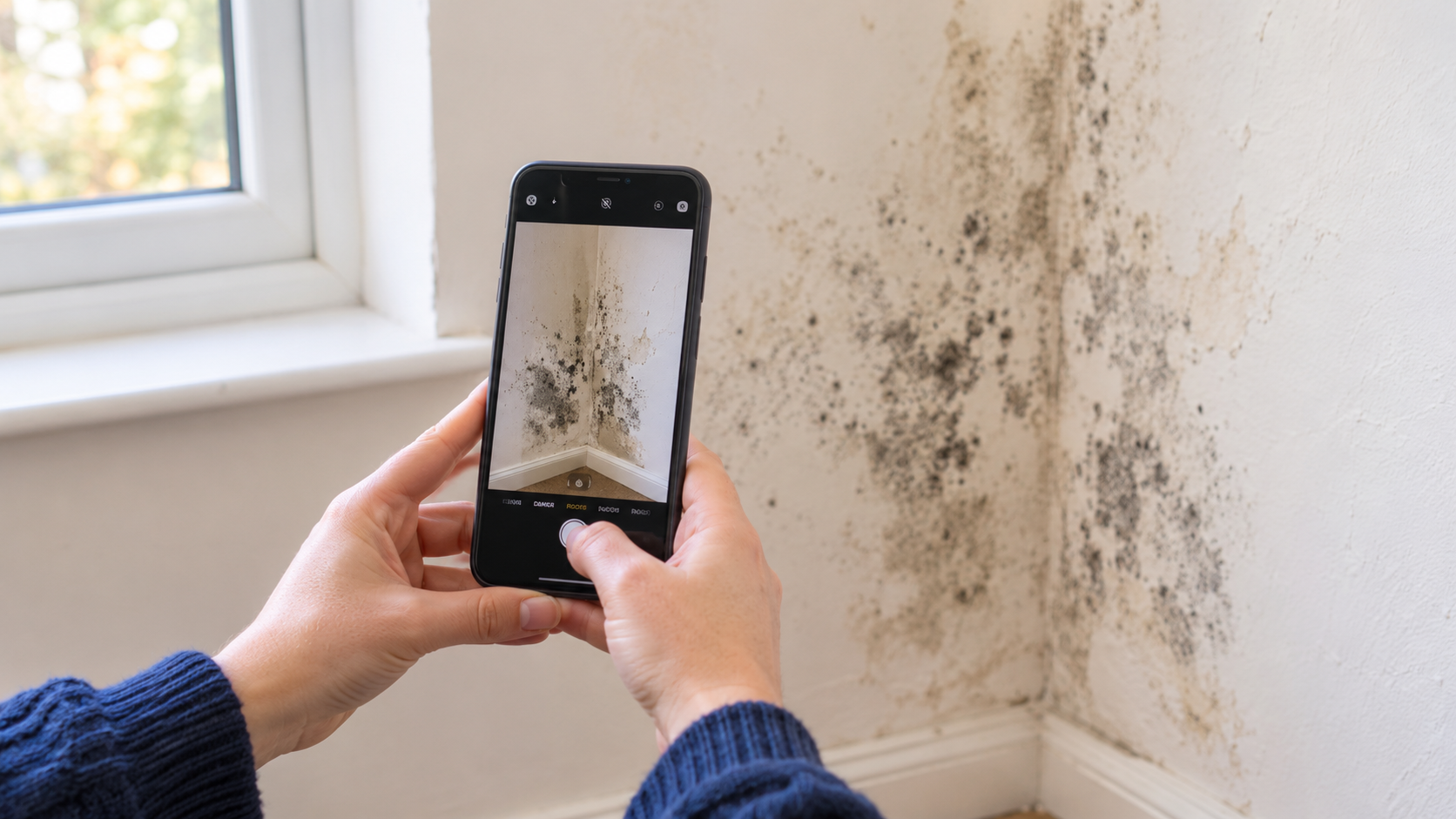
The 7-step action plan
- Document everything today. Photos and short videos of each affected area, with a ruler or coin for scale. Add a damp meter reading if you have one.
- Report it in writing. Email or letter to the landlord or agent, not just a phone call or a portal tick box. Say where the damp is, since when, what you think the cause is, and what you want done.
- Give a deadline. A reasonable ask is an acknowledgement within 3 working days, an inspection within 14 days and a repair plan in writing straight after.
- Keep a log. Dates of every call, visit, reply and promise. Save every message.
- Send a reminder if the deadline passes. State that you will contact the council’s environmental health or private sector housing team if there is no progress.
- Report to the council. Ask them to inspect under the Housing Health and Safety Rating System. This is free and gives you an independent report.
- Consider a claim. If the problem continues, a disrepair claim can force repairs and pay compensation (see below).
Not sure what to put in the letter?
Send your situation and get a letter written for your tenancy, with the correct law and a clear deadline.
Evidence checklist
| Evidence | Why it matters |
|---|---|
| Dated photos and videos, taken regularly | Shows the problem and how it spreads |
| Copies of every message and email | Proves the landlord knew and when |
| Tenancy agreement, inventory, move-in photos | Shows the condition when you moved in |
| GP or hospital letter if anyone’s health is affected | Links the home to health problems, raises priority |
| Receipts for damaged items and cleaning products | Supports a compensation claim |
| Council inspection report | Independent proof that carries real weight |
How long should the landlord take?
For private renting in England there is currently no single fixed deadline that applies to every damp report. The landlord must act within a “reasonable time”, and the more serious the hazard, the shorter that time. The table shows the Awaab’s Law deadlines that apply to social landlords, which are a useful benchmark for what “reasonable” looks like.
| Situation | Social housing deadline | Sensible ask from a private landlord |
|---|---|---|
| Emergency hazard (immediate risk to life) | Make safe within 24 hours | Same day or next day |
| Significant damp and mould hazard | Investigate within 10 working days; written summary within 3 working days after | Inspection within 7 to 14 days |
| Repair work needed | Start safety work within 5 working days of the report | Written repair plan with dates |
The deadlines are for social housing only and the private version may differ when it arrives. Check the current position before quoting them to a private landlord.

If the landlord ignores you
- Council environmental health or private sector housing: report online, ask for an HHSRS inspection. They can serve improvement notices, carry out emergency repairs and fine the landlord.
- Social housing tenants: complain through the landlord’s complaints process, then take it to the Housing Ombudsman.
- Private tenants: a Private Rented Sector Landlord Ombudsman is being introduced under the Renters’ Rights Act. Check whether your landlord has joined and whether you can use it yet.
- Citizens Advice, Shelter and Generation Rent: free advice and templates.
- Solicitor or disrepair claim: many firms take disrepair claims on a no-win-no-fee basis. Be careful about fees and ask for terms in writing.
Do not stop paying rent. Withholding rent gives a landlord grounds to take action against you and can ruin an otherwise strong case. If you are worried about eviction, get advice first.
Compensation
If damp and mould are caused by the landlord’s failure to repair after being told, you may be able to claim for loss of enjoyment of the home (often calculated as a percentage of rent for the period affected), damaged belongings, extra heating or cleaning costs and, where it applies, health impact. The landlord normally needs to have been told and given a reasonable time to fix it. Disrepair claims usually start with a formal “letter of claim” under the pre-action protocol for housing condition claims, which gives the landlord around 20 working days to respond.
If your heating costs have risen because the home is cold and damp, the heating cost calculator helps you put a figure on it for your claim.
FAQ
Can my landlord evict me for complaining about damp?
In England, Section 21 no-fault evictions ended on 1 May 2026, so a landlord now needs a legal ground to end a tenancy. Councils can also act against landlords for illegal or retaliatory behaviour. Keep everything in writing.
Is black mould dangerous?
Any widespread mould can irritate the lungs and worsen asthma and allergies, and it is a particular concern for babies, young children, older people and anyone with a weakened immune system. If anyone is ill, see a GP and tell them about the mould.
Can I fix it myself and send the landlord the bill?
Not without agreement. Repair costs are only recoverable in limited circumstances and the wrong approach can backfire. Get advice before spending money on repairs.
What if my landlord says it is my fault?
Ask for the cause in writing and for an inspection. Landlords must make sure the home has adequate ventilation, heating and insulation. A council inspection settles the question independently.
Do I need to leave while repairs happen?
Not normally. If the home cannot be lived in, ask in writing for alternative accommodation or a rent reduction and get advice.
Can I leave the tenancy early?
You are usually still bound by the tenancy terms, but serious disrepair can support an argument for ending it. Get advice before you act.
One-to-one help
Get personal advice and a letter written for your situation
Tell us what is happening and you will get a clear plan, not a generic template.
- Advice on the best next step for your tenancy
- A ready-to-send letter to your landlord or agent, citing the right law for England, Scotland or Wales
- Help with a follow-up letter or council complaint if needed
When you message, include your country, who you rent from, how long it has been going on and a photo or two.
This guide is general information for tenants and is not legal advice. Laws and timescales change, particularly under the Renters’ Rights Act, so check the current position or get advice for your situation. For heating, grants and bills guides, see the WarmGuide homepage.